
Tagged: Active Harmonic Filter
ABB literature FACT CHECK
We came across ABBs brochure for the ACS880 Ultra Low Harmonic and Regen Drives which is ABBs Active Front End solutions. We noted that someone has been very imaginative on a level where it is necessary to point it out. Surprising for such a well renown market leader.
What are we talking about?
Below is a snapshot from ABBs brochure for the ACS880 highlighting the incredible advantage of using Active Front End(AFE) drives instead of using passive or active filters. The main point being that the AFE has a much higher system efficiency than Active Harmonic Filters(AHF) and Passive Harmonic Filters(PHF) while maintaining a very high THD-reduction.
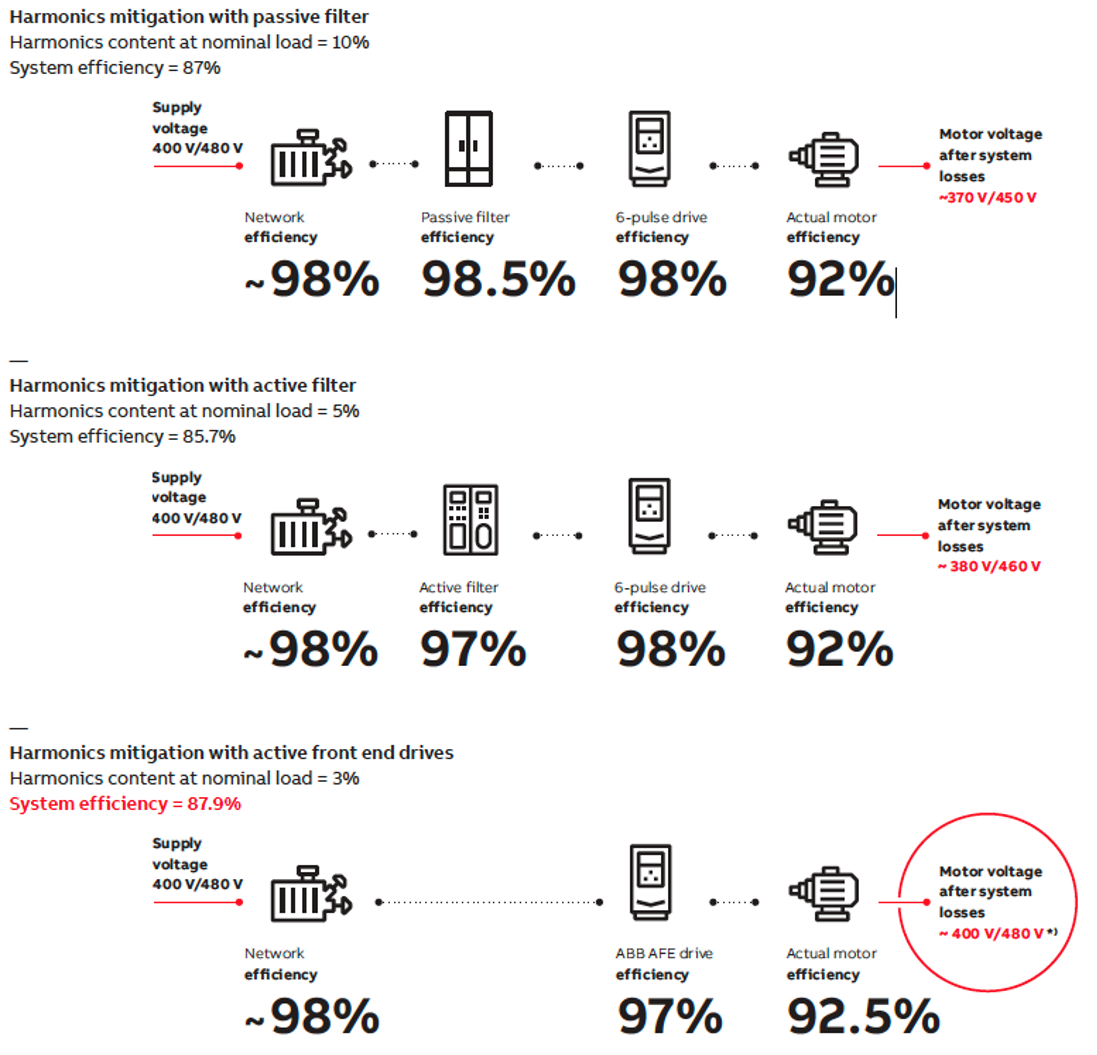
Figure 1: Snapshot from ABBs brochure in question.
So what is wrong?
Well, lets start with the AFE efficiency of 97%. Sounds fantastic, as an AFE is 2 x inverter +1x LCL filter it sounds incredible. Which it is. Theoretical losses should be roughly 2×1,2+2% so maximum 96,6%. There is an easier way to verify this and that is to actually check ABBs own datasheet for the ACS880.
An 250 kW ACS880-UHD has 11 kW losses through heat. That is 4.4% or an efficiency of 95.6% far from the 97% stated. To be fair a wall mounted 110 kW AFE is rated at 3.5% losses indicating 96.5% efficiency but still well below 97%.
So AFE system efficiency is 95.6-96.5% at optimum.
Secondly they are making a big deal that a 6-pulse drive create a significant voltage drop which in turn reduce the motor efficiency. Based on the numbers this must be an AC-choke they are using. Most drives are outfitted with DC-chokes with significantly less voltage drop. It is correct that a passive serial filter cause a voltage drop. An Active Filter being placed in parallel does not cause a voltage drop.
So, once again lets go back to the ACS880 6p version which is equipped with a dc-choke as standard. A 250 kW 6 P ACS 880 has 1,7-2,4% losses (wall/cabinet). So 98% is a good average.
Thirdly, most blatantly to us Active Filter Aficionados they have placed the Active Filter in a serial configuration!? Thus assuming that the Active Filter is sized 100% to load just like the Front End. In reality a typical active filter is placed in parallel with the load and sized based on the THD-load or roughly 25-33% of the load.
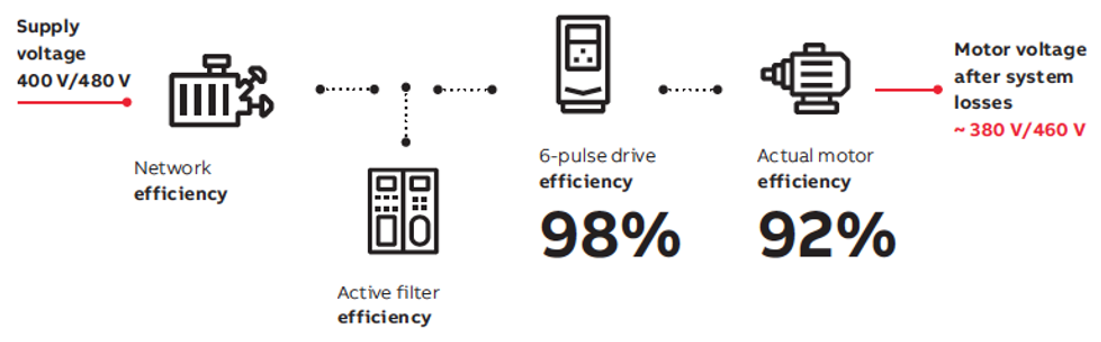
Figure 2: We helped ABB marketing correct the system topology. AHF sizing only focus on THD-level.
Using a Comsys ADF P100 as reference of an modern Active Harmonic Filter, it has 97.4% efficiency or 2.6% losses according to their datasheet.
So the AHF system losses will be 0.25-0.33 * 2.6 = 0.65-0.86% or 99.14-99.35% for simplicity we use AHF system size to be 30% of load or 99.22% system efficiency.
Updated system efficiencies:
Active Filter
Network Active Filter 6-P Drive Motor System Efficiency
98% 99.22% 98% 92%* 87.6%
*) The voltage drop across a 6P drive should be somewhere <6 V + any reactor loss if installed thus much smaller motor loss difference than suggested here. We do not have good data however and leave it as it is.
ACS 880 AFE
Network AFE Drive Motor System Efficiency
98% 95.6-96.5% 92.5% 86.7-87.5%
Difference AHF vs AFE = 0.9 -0.1 %
Conclusion
So the Active Filter Configuration system efficiency is actually on par or slightly better than the ACS880 at full load.
That is without AHF sleep mode, modularity and other complimentary solutions available to Active Filters. At part load things get even worse for the AFE but that is a story for another post.
Enabling a seamless Champions League final in Istanbul with Active Harmonic Filter

Service Partner: Wömner Power Quality Solutions
Location:Istanbul, Turkey
Industry: Sports Venue
Timeline: 2020-2023
Background
When Istanbul was selected to host the 2020 Champions League Final, the Turkish Football Federation contracted Renaissance Construction to renovate the city’s Olympic Stadium as the venue. Although the final was delayed until June of 2023 due to the pandemic, the work proceeded as scheduled and Wömner Power Quality Solutions, Comsys’s partner in Istanbul, was selected to ensure that no power quality issues would disrupt the prestigious event.
Challenge
Predicting what could go wrong during the final is difficult for various reasons. Firstly, power is peak during games, which take place only two or three times a month at most. Secondly, the stadium is supplied from several medium voltage (MV) substations, each having two backup transformers making the measurement of energy consumption complex due to the uncertainty of not knowing which of the three transformers is being utilized. Thirdly, a total of 25 km of MV underground cable creates 180 kVAR of capacitive power per hour. During game time reactive power is balanced, but on no load condition capacitive power is there and because it is on MV level it cannot be easily measured due to the position of the meter, which is 6 km away. And finally, two large scoreboards with a lot of power electronic equipment were installed for the final, creating harmonics.
The customer’s main priority was on harmonics and trips due to these, as well as on reactive power management. Normally, other power quality issues are quite small.
Solution
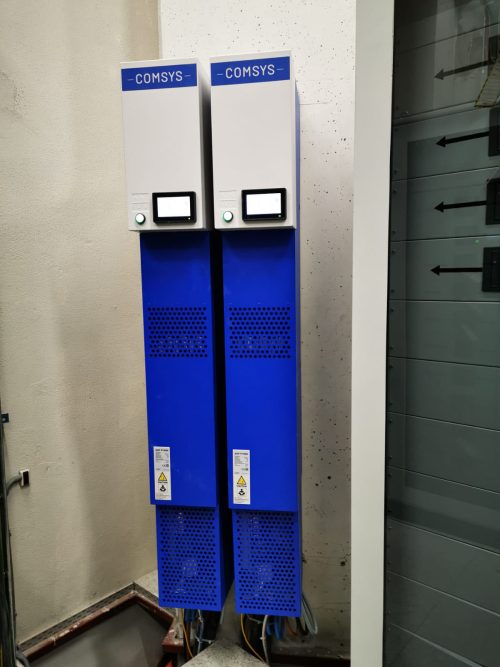
A total of seven Comsys ADF P100N active harmonic filters were installed by Wömner; two at each of the three main substations for the stadium, and one additional unit at a smaller utility substation.
Result
Since the filters were installed in early 2020, the customer has experienced no problems due to capacitive penalties and game nights have been safe and secure. The Active Harmonic Filter technology is successfully compensating harmonics and preventing capacitive penalties.
Merus Power case study on EV-charging station

Segment background
The battery-operated truck industry has emerged as a transformative force within the transportation sector, offering a sustainable and eco-friendly solution to the longstanding challenges of heavy-duty vehicle emissions and fossil fuel dependency. These electric trucks, powered by advanced lithium-ion battery technology, are gaining momentum as an integral component of modern urban logistics and long-haul transportation. With the promise of zero-emission operation and significant reductions in operating costs over the long term, battery-operated trucks are not only aligned with environmental objectives but also represent a strategic choice for businesses aiming to optimize their fleet operations, comply with tightening emissions regulations, and contribute to a cleaner and more sustainable future for the global transportation industry.
Challenges at the customer’s facility
Driven by the need to comply with stringent grid code requirements, our customer recognized the necessity of improving power quality at their electric vehicle (EV) charging station. Specifically, they were facing challenges with harmonics, a common issue arising from the use of both AC and DC charging systems. The AC chargers, converting AC power to DC for the vehicles, were causing harmonic distortions in the electrical grid. DC fast chargers further compounded these harmonic problems, even introducing voltage fluctuations. To rectify these issues and meet grid code compliance, solutions like harmonic filters and active power factor correction were essential. Effective management of these harmonics is not only critical for maintaining the stability of the customer’s EV charging station but also impacts the integrity of the surrounding electrical infrastructure.
Our Merus® Solution
To address the harmonic issues in our customer’s EV charging station, the recommended solution is the use of Merus® A2 Active Harmonic Filters. Suggested and installed by our local partner, Power Capacitors Ltd, the Merus® A2 offers an efficient way to improve power quality. These filters are specifically designed to manage the harmonics introduced by both AC and DC chargers, thereby enhancing the system’s overall performance and reliability.
Incorporating Merus® A2 into the electrical setup involves its strategic placement to effectively reduce harmonic distortions from the charging units. By actively isolating and filtering out specific harmonic frequencies, the Merus® A2 contributes to improved power quality, reduced voltage distortions, and a more stable electrical grid. The IP31 design of Merus® A2 ensured a seamless and straightforward installation, aligning well with the site’s indoor setting and existing infrastructure.
Segment / Application
EV-charging station for battery operated trucks
Location
United Kingdom
Power quality issue
- High current harmonic distortion
Merus® Solution
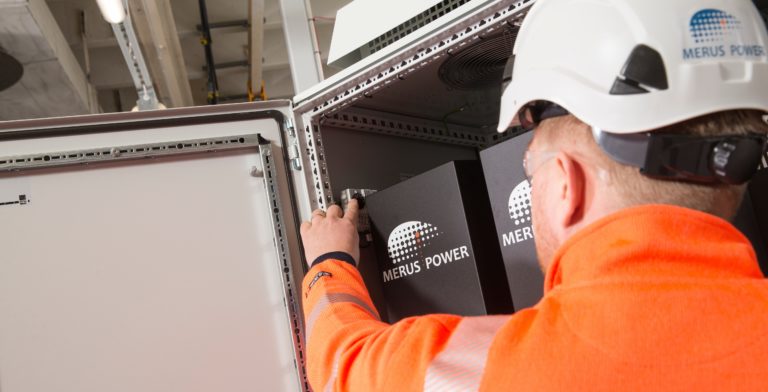
Merus® A2 – Active Harmonic Filter
Merus® A2 is a scalable, versatile, and durable active harmonic filtering solution designed and manufactured in Finland using innovative Merus® technology.
Customer Benefits
- Grid code compliance
- Reduced wear and tear on electrical components
- Reduced maintenance costs
- Longer lifetime of sensitive electrical equipment
- Improved system efficiency
- Optimized performance of the charging system
Results after installation
Since installing the Merus® A2 Active Harmonic Filters, our customer’s EV charging station has experienced significant improvements, including reduced wear on electrical components and extended equipment life. These improvements have resulted in a more efficient system that not only complies with demanding grid codes but also contributes to a more sustainable electric vehicle charging infrastructure. The expertise provided by our local partner, Power Capacitors Ltd., was invaluable in achieving these outcomes.
The Merus® A2 Filters have effectively minimized the harmonic distortions originating from AC and DC chargers. This optimization has led to increased energy efficiency and lower maintenance costs. Thanks to these advancements, the customer’s EV charging station now operates with improved power quality and grid stability, fulfilling industry standards for both performance and sustainability.

Case story: How AHF put a stop to packaging manufacturer’s production outages
Background
One of Canada’s largest manufacturers of innovative and sustainable packaging products was facing multiple transformer failures and production stops due to power quality issues at one of its many sites. The manufacturer needed to find a way to eliminate these recurring problems and troublesome interruptions. Multiple studies on power quality were performed by different contractors. Comsys Partner, ADM Engineering, was one of the companies performing power studies and providing analysis report.
Challenge
The challenge facing ADM was to determine what was causing the periodic failures in the main transformers and to recommend a reliable remedy. Following site measurements and subsequent analysis of the data captured by ADM and Comsys, the root of the problem was identified. The culprit was the resonance caused by the interaction between the natural resonant frequency of the power system, tuned capacitor banks, and nonlinear loads. Based on these findings, ADM was able to recommend ADF as the only viable solution to the site’s persisting problems.
Solution
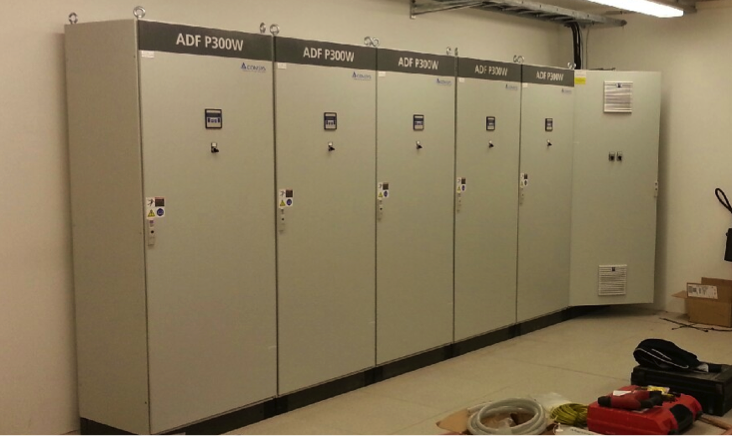
ADF P300 – Active Harmonic Filters engineered and assembled by ADM using PPM300 modules.

Result

The ADF solution has been operating successfully since January 2020, eliminating resonance and harmonics as well as providing near unity power factor. Cost savings alone have amounted to around CAD 30,000 per month by eliminating harmonics and correcting the power factor. Increased uptime and productivity provide even more value.
Key Results:
- Mill power outage frequency significantly reduced
- Oil cooled transformer runs much cooler and requires less frequent oil changes
- Significantly reduced running temperature of several transformers
- Reduced nuisance trips and blown fuses of 600V switchgear
- Reduced saturation of feeding transformers, reduces voltage variations to nominal values

Current THD – before & after installing ADF

Power Factor – before & after installing ADF


Machine drives system supply voltages before active filters installation

Machine drives system supply voltages after active filters installation
Active Harmonic Filter Application in Ba Na Hills, Vietnam
Here is a great showcase of the effects of applying active harmonic filters on a cable car installation made by Power More in Vietnam. Ba Na Hills Mountain Resort are holders of three Guiness Records – Longest single rope cable car system, Longest distance between stations and Heaviest cable roll. For Ba Na Hills, power quality is a question of safety and service quality. With total harmonic distortion 5 times higher than the national regulated level, Ba Na Hills were facing several problems.
- Station to station communcation was interrupted
- Power factor penalties
- Damaged PFC capacitor units
- Inerference with PFC controller
- Reduced motor effeciency in generator mode to 50%
Applying ADF Power Tuning active filters from Comsys to battle both power factor correction and harmonic filtering resulted in:
- Eliminated risk of PFC failures
- Eliminated power factor penalties
- Increased motor efficiency to 100%
- Improved cable speed
Vacon Launches NXC Low Harmonic Drive Based on Active Harmonic Filter Technology
 Vacon joins Danfoss as the second tier 1 drives manufacturer to integrate an active harmonic filter with a drive to lower harmonics. Vacons stand-alone NXC range previously offered 12 pulse as well as active front end drive solutions.
The Low Harmonic NXC was recently shown at a large exhibition in Sweden and is reportedly offered on a project by project basis but will become a standard offering in the near future. The system shown, verifies the smaller foot print and weight of the Active Filter drive system compared to the more common Active Front End drives. The active filter NXC also has a lower power loss, which is becoming more important as the EN 50598-2 standard is introduced.
Low Voltage Active Filter as a Medium Voltage STATCOM for Windpower

Kville power station compenstated by Comsys STATCOM design.
When the 32 MW Kville wind power station was being built in Sweden, the local grid owner Fortum was looking for alternatives for inductive compensation. The long underground cable length cause a dynamic capacitive reactive power problem that normally is compensated using a large MV inductor. The inductor is very large and costly device at these sizes and Fortum wished to investigate other alternatives.
Comsys used its extensive knowledge from MV applications in applying its liquid cooled low voltage Active Filter with a step up transformer to create a 2,5 MVA STATCOM solution to solve the problem. If applied correctly, an active technology is very compact and flexible enabling high availability. Comsys liquid cooled modular design offers a high degree of redundancy and availability as the modules can be operated individually.
A further complication was the requirement to measure at the PCC on the 130 kV level so the Low Voltage ADF STATCOM worked through two step-up transformers. After extensive simulations by Comsys, the system was designed and supplied through the turn key integrator Siemens.
Comsys P700 modular STATCOM solution
The active filters where installed in an existing building and the step-up transformer was installed outside, saving valuable indoor space and requiring no additional transformer cooling.
The solution dynamically compensates the capacitive reactive power and keeps it in line with the utility’s requirement. Due to the STATCOM following the load dynamically and observing both voltage and current, optimal grid conditions are ensured during all operating conditions.
The investment cost was reported to be lower than using the customized inductor solution proving the competitiveness of small active STATCOM versus passive options.
The ADF P700 STATCOM is a perfect solution in a dynamic environment such as wind farms. It is as cost effective and compact as a passive solution but with superior performance.
AHF Compensates Thruster and Refrigeration Compressor
Danfoss used an Active Harmonic Filter to compensate the THD of their installed 960 kW of VFDs for thruster and refrigeration compressor on the fishing vessel Gitte Henning #8. The AHF ensured to keep the installation within class requirements. Read more at:
Active Harmonic Filter as a Tool to Save Money
Power quality mitigation products are not only used to fulfil regulations such as IEEE-519 and G5/4. They have actual effects saving both power and increasing productivity. This presentation by ABB exemplifies some of their early case studies indicating savings of up to 10%. Note that these savings compare to having no harmonic mitigation.
The cases below clearly show the great business value of implementing a high power quality standard within your facility. The secondary effects of complying with IEEE 519 or similar standards enables the local grid to be dimensioned for less reactive power and harmonic current thus saving money through thinner cabling, smaller transformers etc. Power quality mitigation is not only a cost in the general investment calculation but a tool to save money.
IEEE 519 and Active Harmonic Filters
Standards governing distortion parameters in the electric grid such as IEEE 519, G5/4, EN 61000, EN 50160 and D-A-CH-CZ among others most often require voltage harmonic distortion to be below 5-8%. These are all recommended, not obligatory practices.
Although adherence to standards such as IEEE 519 is not obligatory, more and more utilities and other parties of interest are using these standards as a benchmark to place demands on their customers. This is a way for them to be able to guarantee disturbance free delivery on their end. It is also used as a part of an active environmental agenda to show a decreased energy usage and reduced energy costs for many energy intensive processes.
One way to meet the new requirements is to simply reduce the harmonics to an acceptable level. Many modern active harmonic filters can pinpoint the harmonic orders that are contributing, and the compensation power can be optimized to meet the requirements in the most cost efficient way.
The modern Active Harmonic Filter is one of the most efficient harmonic solutions the market today. Filters are commonly available in a 208 – 480V version and a 480 – 690V. The Active Harmonic Filter can be combined with 6 pulse drives and will be placed in parallel with the load, minimizing the need of compensation power to 20 – 30 % of the load. The parallel placement will also ensure the redundancy in the design, which is a major advantage in a critical applications. Modular solutions, which are now more commonly available gives a dynamic and agile solution to work for future improvements to existing machinery. This is all in keeping with the spirit of standards such as the IEEE 519 toward a sustainable energy future.
 Active Harmonic Filters